Showing posts with label cortisol. Show all posts

Sunday, June 26, 2011

Calm Yourself...With Meat

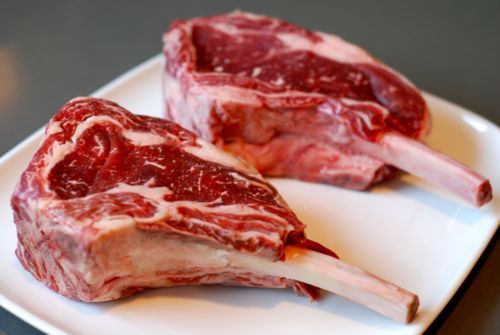
According to one McGill University study, "seeing meat makes people significantly less aggressive."
Frank Kachanoff, who studies evolution at the university’s department of psychology, had initially thought the presence of meat would provoke bloodlust, believing the response would have helped our primate ancestors hunt. But in fact, his research showed the reverse is true.
I'm doing my part to help keep everyone around me stress-free by wearing my favorite meat-tastic Nom Nom Paleo shirt.


There is, of course, a less pricey way to help your friends and neighbors lower their cortisol levels. Just print out this photo and Scotch-tape it to your chest:


Works wonders.

Friday, May 6, 2011

Nurses: Pass on the Freebies

In the immediate wake of Star Wars Day and Cinco de Mayo, it may have escaped your notice that today was National Nurses Day. But don’t fret: National Nurses Week runs through May 12, so go celebrate by giving your favorite nurse a high five.


But once your excitement dies down a bit, stop for a moment to ponder the slings and arrows our nurses endure to help keep us healthy -- including irregular hours, night-shift work, physically and mentally draining responsibilities, and lack of sleep. (Two of our mighty 5 a.m. crew members are nurses, and I'm amazed at how they’re able to blast through CrossFit workouts before heading to the hospital for their shifts.)

All of this excess cortisol is taking its toll on the nursing profession as a whole. In May of 2008, the Journal of American Academy of Nurse Practitioners published a study of “the incidence of overweight and obesity in nursing professionals,” and found that 54 percent of the five thousand nurses surveyed were clinically obese or overweight. More than half of these nurses also stated that they “lack the motivation to make lifestyle changes” despite their excess weight.

Thankfully, Sprinkles Cupcakes, Dunkin’ Donuts and Cinnabon are here to save the day.

According to its Twitter feed, Sprinkles handed out free cupcakes to nurses today.


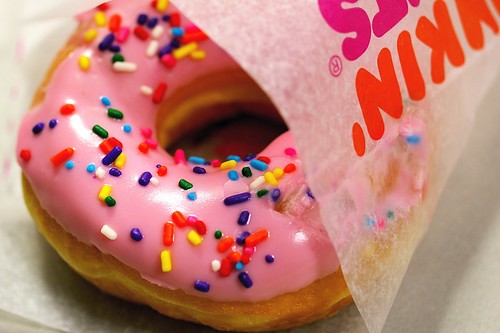
On Monday, Dunkin’ Donuts is delivering thousands of free donuts to hospitals AND giving away sweet, sweet beverages to nurses.


Cinnabon’s even more generous, offering free sugar bombs to our nation’s nurses all week long.


Did you notice that only purveyors of sugary, grain-based desserts are "celebrating" Nurses Week by giving away their products to nursing professionals? Is it just a coincidence that the manufacturers of the #1 source of calories in the Standard American Diet are trying to shovel their evil concoctions into the mouths of our health professionals?

Call me a conspiracy theorist, but I suspect that these junk food peddlers know exactly what they're doing. It's no accident that they've decided to target an industry full of people whose high stress levels have triggered insatiable sugar cravings: They know full well that  nurses are particularly susceptible to sugar binges due to their elevated cortisol levels. And so these companies have decided to leverage Nurses Week as an excuse to distribute free samples and get more folks hooked on their dietary crack.

Well played, sugar-pushers. Well played.

[Previously: Cupcakes are Evil]

Saturday, March 12, 2011

Too Little of a Good Thing?

You know how I feel about the overconsumption of carbohydrates. If -- like most people in this country -- you’re overweight after a lifetime of eating a carb-heavy Standard American Diet (S.A.D.), switching to a Paleo approach to nutrition will result in loss of body fat. After all, a person who stops eating grains, sugar and legumes will naturally take in less carbohydrate than before.

But what if you’re already lean? What if you’ve cut your carb intake (by going Paleo or Atkins or Weston A. Price or whatever) and your metabolism’s no longer out of whack? And what if you’re regularly (and intensely) exercising? Are you still supposed to avoid carbs?


The short answer: No.

Here’s the thing: The Paleo diet isn’t intended to be a low-carb diet, and it doesn’t require strict avoidance of carbohydrates. In fact, going super-low-carb may not be optimal for many of us in the CrossFit community.

In the March 2011 issue of The Performance Menu (subscription required), Scott Hagnas of CrossFit Portland points out that an individual’s carbohydrate needs are very different if “you are a firebreathing athlete or are already lean.” Yet many of us continue to restrict our carb intake even after it no longer makes sense to do so. As Hagnas puts it:
One common pattern I often see is the guy or gal eating a low carb, strict Paleo diet at, say, around 50 grams of net carbs per day. This person is training hard, hitting regular metcons, and perhaps doing some intermittent fasting on top of it. While this regimen may feel great at first, after a while this person becomes tired but can’t sleep well. They find they can’t drop some pesky belly fat, often develop a caffeine addiction and are cold all of the time. Finally, they end up with low libido. Yay for healthy living!
Yeesh.

Hagnas points out that maintaining a strictly low-carb lifestyle while CrossFitting can cause a host of problems, including:
  • Chronically elevated cortisol / catecholamine levels (and suppressed secretory IgA antibody levels), which will weaken your immune system.
  • Insulin resistance: “Higher free fatty acids during ketosis promote insulin resistance to spare whatever little carbohydrates are available for the central nervous system. Toss in high cortisol from stress due to excessive exercise and quite possibly other lifestyle issues, and you end up with chronically elevated blood sugar -- even in spite of a strict low carb diet.”
  • Lowered testosterone levels (due to excess cortisol production).
  • Disregulation of thyroid hormones: “Conversion of T4 to the active T3 is impaired, with the T4 getting converted instead to the metabolically inactive reverse T3. Body temperature and the metabolic rate drops when this happens, and blood glucose begins to run higher.”
I’ve occasionally stumbled into the mental trap of conflating “carbs” and “grains,” but that’s just me being dumb. The fact that a subset of carbs (grains, sugar, legumes) are associated with the rise of diseases of civilization doesn’t mean that all carbs are evil.


The moral of the story, as Hagnas puts it:
If you are regularly performing metabolic conditioning, even if you limit yourself to 3-5 minutes of very intense activity, then I’d ratchet your carbohydrate intake upward. Consume your carbs not only in the post workout window, but also throughout the day.
Of course, just ‘cause you work out hard need to take in more carbs doesn’t give you license to indiscriminately “carbo-load” by downing a pizza and a stack of pancakes. Stick to veggies for your carb sources: yams, sweet potatoes, beets, chestnuts, etc. Have some protein, too. Just don’t include fat or fruit in your post-workout meal -- fat'll inhibit your body's ability to replenish your muscle glycogen, and the fructose in fruit will prioritize the replenishment of your liver glycogen over your muscle glycogen.

Time to stock up on starchy tubers, y'all.

Wednesday, December 8, 2010

Fasted Training?

I recently received an email from a reader asking me what I eat before my morning workout.

My answer: Nothing. As you may recall, I've adopted an intermittent fasting protocol, and I'm exercising on an empty stomach.


Some people think I'm insane for diving into CrossFit workouts ten or twelve hours into a fast. How do you have the energy? they ask. Don't you bonk halfway through your workout? Are you not aware that breakfast is the most important meal of the day?

Certainly, fasted training isn't a good idea unless your cortisol levels are already in check. But if you're  (one of the few of us) getting good sleep, keeping your stress levels low, and aren't pushing your body beyond capacity when exercising, working out without food in your belly is something to consider.

Fasted training can help increase endurance and boost the body's ability to store muscle glycogen efficiently. And as Chris Highcock pointed out, it can help you recover faster from endurance exercise. Plus, from an evolutionary perspective, it's been pointed out that our cavemen ancestors likely exerted themselves most strenuously while hunting for food -- not after they'd filled their stomachs with a meal.

And by the way, breakfast is by no means "the most important meal of the day." That's just a marketing slogan that breakfast cereal makers dreamed up decades ago (and still reverberating in the echo chamber of lazy science, agribusiness marketing, and the informational cascade). Don't swallow the hype: Skipping a meal doesn't "slow your metabolism" and make you fat.

Wednesday, July 28, 2010

Coffee, Tea or Me?


Over the past few days, I’ve been trying to gradually phase out my caffeine intake, but it’s been a spectacular failure.

I was actually doing okay for a few days. Despite getting up before dawn and the soporific effects of my long, boring commute, I fastidiously avoided coffee and Diet Coke. Until today.

Today started with a particularly brutal workout, and after getting ready for work, I had back-to-back meetings pretty much from 8 a.m. until now. I’m dead tired, and not looking forward to battling the bumper-to-bumper traffic back home. Before I knew it, I was down in the company cafĂ©, cradling a big-ass caffeinated beverage.

I guzzled it before my brain even registered any guilt. And I feel better.

But it got me thinking: What exactly does caffeine do to us? Does it impact physical performance, fitness or weight loss?

The “experts” are all over the place on this one.

Some believe that caffeine is an unmitigated disaster. They point out that when caffeine is consumed, it wreaks havoc on your system by:
  • Triggering the production of adrenaline, giving you a temporary spike in energy (but causing you to crash later);
  • Inhibiting the body’s absorption of adenosine, a hormone that calms your body;
  • Increasing your body’s levels of cortisol – the “stress hormone” – which can sabotage your weight loss and other health goals;
  • Increasing your dopamine levels, making you physically dependent on the substance.
Mark Sisson has sounded the alarm as well:
As a stimulant, caffeine offers the temporary benefits of improved concentration, enhanced memory and an extra bit of energy. However, this “heightened” state has some unappealing physical effects as well. Obviously, there are the proverbial caffeine jitters and, for a few people who are either caffeine sensitive or who regularly overindulgence, even heart flutterings. But there’s more. Recent caffeine consumption can reduce blood flow to the heart during exercise.

And, apparently, some of us are “slow caffeine metabolizers” (who knew?). Being part of this crowd and partaking of caffeine, some research shows, puts us at increased risk for non-fatal heart attacks. Caffeine has been shown to also raise blood sugar levels in those with type 2 diabetes.

Additionally, caffeine induces heartburn in many people. Given that prescriptions targeting acid reflux are so common these days, we often wonder how much caffeine plays into many people’s symptoms. At a certain point for certain people, caffeine probably isn’t worth it just from that standpoint alone.
But others have staked out the opposite side of the argument, and claim that caffeine actually enhances endurance and helps drive weight loss. According to The London Times,
researchers investigating caffeine’s influence on fitness and sports performance are discovering that an amount considered acceptable by most health experts — only a cup or two a day — is needed to get better results at the gym. They have shown that there are substances in caffeine which trigger the release of body fats into the bloodstream during activity.
Plus, as we all know, caffeine can help stave off fatigue:
A study at the University of South Carolina, published in the American Journal of Physiology (2003), revealed that one or two cups of coffee up to an hour before a gym session can delay or prevent post-exercise tiredness by up to 60 per cent: “People seem to be able to work harder without realising it when they take caffeine before a workout,” says Louise Sutton, the principal lecturer in sport and exercise nutrition at Leeds Metropolitan University.
And the American Journal of Cardiology published a study purporting to show that
caffeine may help to boost nitric oxide (NO) levels, resulting in increased blood flow to muscles. According to a study done by Japanese researchers, when young, healthy males were given 300mg of caffeine pills, the dilation of their forearm blood vessels increased as a result of greater production of NO. As a result, some have taken this to mean that “drinking caffeine before a workout will not only give you a boost in stamina and strength, but it may also lead to a better muscle pump and, over time, greater muscle hypertrophy (growth).”
Who to believe? The more I look into the question of whether caffeine is bad for you, the more I’m convinced that the answer is a resounding “maybe.”

As Robb Wolf explained in one of his Paleolithic Solution podcasts, the answer depends on the dosage of caffeine that’s ingested, as well as the individual’s response to the caffeine’s effects on his/her central nervous system. While caffeine intake may negative affect some folks’ hormone levels and lead to diminished performance and addiction, it may have little effect on others – aside from providing some of the benefits described above.

In other words, I just wasted a crapload of time trying to hunt for an easy answer that doesn't exist.

Oh, well. I've decided to once again try to abstain from caffeine – not because I’ve concluded it’s evil, but because I can save a ton of money by drinking water instead.

Plus, I have a headache now, and caffeine will only make it worse.