

A very good friend of mine sent me a link this morning to a piece on NPR.com by anthropologist Barbara J. King entitled "The Paleo-Diet: Not the Way To a Healthy Future." In it, she argues that ancestral eating approaches are nothing more than a "paleo-fantasy" with no scientific roots in paleo-anthropology.
I'm a budding Paleo nerd, so the headline got me excited. I eagerly scanned the article, hoping to learn more about King's position. I love a good argument.
But sadly, there are no good arguments in King's piece. In fact, there's barely any comprehensible argument at all. Even worse, King's article never lives up to its title; there is no discussion of why the Paleo diet is "not the way to a healthy future." Instead, King simply sets up a straw man to knock down, painting a picture of Paleo as a dogmatic, homogenous effort to reenact caveman life (which it isn't), and then dismissing the benefits of ancestral eating because: (1) it doesn't accurately reflect prehistoric diets, (2) humans can survive eating lots of different things, and (3) it's not environmentally friendly. Along the way, she claims that "science" trumps the evidence bolstering Paleo nutrition, but then fails to cite to any actual science at all. Just in time for Halloween, this is an opinion piece masquerading as science journalism.

Here are King's specific claims, and my responses to each of them:
Argument 1: "Our ancestors began to eat meat in large quantities around 2 million years ago, when the first Homo forms began regular use of stone tool technology. Before that, the diet of australopithecines and their relatives was overwhelmingly plant-based, judging from clues in teeth and bones. I could argue that the more genuine 'paleo' diet was vegetarian."
Me: Sure, based on the fossil record, early hominids may have been primarily plant-eaters. But later hominids like Australopithicus afarensis (who lived from 3 to 4 million years ago) and Homo erectus (1.3 to 1.8 million years ago) developed jaw structures and teeth to eat meat. In other words, our distant ancestors may have been vegetarians by necessity -- but as soon as they could get their hairy paws on animals, they ate 'em up. And so we've been eating meat for millions of years.

Oh, and by the way, it's disturbing that King -- a biological anthropologist who throws around her "scientific" knowledge on this topic -- doesn't seem to know when the Paleolithic era took place. The Paleolithic is defined as "the prehistoric era distinguished by the development of the most primitive stone tools discovered." That's why it's also known as the Stone Age. King herself points out that our ancestors started eating meat when we started using stone tools roughly 2 million years ago. So if the Paleolithic era began 2 million years ago, and that's when we started "eat[ing] meat in large quantities," how can she argue that "the more genuine 'paleo' diet was vegetarian"?
My head hurts.
(And not to get all technical and stuff, but there's evidence that stone tools were being used up to 3.4 million years ago -- so the Stone Age stretches back farther than many had thought.)
Argument 2: "More worrisome are persistent attempts to match a modern diet to an 'average' Paleolithic one, or Loren Cordain's insistence that 'we were genetically designed to eat lean meat and fish and other foods that made up the diet of our Paleolithic ancestors.' Here's where science most forcefully speaks back. First, ancient hunter-gatherer groups adapted to local environments that were regionally and seasonally variable -- for instance, coastal or inland, game-saturated or grain-abundant (eating grains was not necessarily incompatible with hunter-gatherer living)."

Me: King sets up the straw man argument that we're trying to "match a modern diet to an 'average' Paleolithic one," but she conveniently ignores that we're actually not trying to "match" anything at all, let alone a single, inflexible menu.
King doesn't seem to understand that Paleo -- at least the way most of us approach it -- is not about strict historical re-enactment. Rather, "Paleo" is just a convenient label -- a shorthand. Perhaps a better way to put it is that we're trying to eat foods that are whole and unprocessed, and avoid those that are inflammatory or metabolically damaging. (Read Chris Kresser's take on the Paleo template. He articulates this point much better than I ever could.) It so happens that hunter-gatherers -- regardless of their foraging strategy or local environments -- ate this way, and didn't eat cupcakes and guzzle soy milk. But it doesn't mean we're trying to precisely replicate the eating patterns of actual cavemen. Cavemen diets give us a starting point -- a hypothesis. They're not the end-all, be-all.
And although King pays lip service to the notion that "leaders of the paleo-diet movement don't think monolithically," she then immediately makes the assumption that Loren Cordain's "The Paleo Diet" is the ancestral eater's Ten Commandments. Her statement that "lean meat...takes center stage" and that Paleo eating is "homogenous" is wrong and outdated; many -- if not most -- Paleo eaters these days recognize the value of good dietary fats. Even Cordain has acknowledged that his "lean meat" recommendation needs revision.
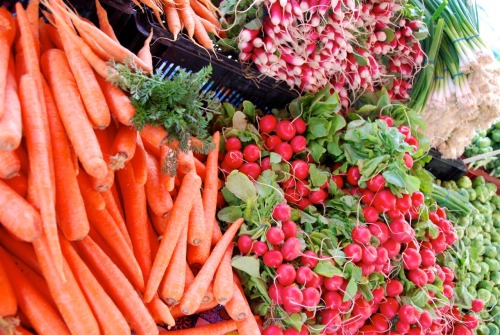
Further, it's bizarre that King is trying to make the point that Paleo eaters don't eat seasonally like our ancestors did. After all, seasonal foods are emphasized in most Paleo approaches.
Finally, although King argues that "eating grains was not necessarily incompatible with hunter-gatherer living," there's no evidence of any hunter-gatherer society that relied on grains as a staple of their diet. By definition, hunter-gatherers are not farmers, and wild grains -- even if abundantly available -- are not edible absent harvesting and processing. The vast majority of hunter-gatherer societies didn't eat grains, and those that did didn't lean heavily on 'em -- until they became agrarian societies. After all, a hunter-gatherer society that begins farming the land isn't a hunter-gatherer society any longer.
[UPDATED: In the comments below, Lizzy points out that there's evidence of Paleolithic grain-eaters. Some hunter-gatherer societies began transitioning to herder-farmer patterns during the Upper Paleolithic. It's fascinating stuff, but in the end, I'm not sure it matters. Again, the intent of most modern Paleo eaters isn't to replicate actual cavemen diets -- it's to eat in a way that promotes optimal health. To the extent we're trying to eat like cavemen, then, we're trying to eat like the ones that didn't eat craploads of pro-inflammatory stuff.]
So just how is "science...forcefully speak[ing] back"? King never explains.
Argument 3: "[G]enes were not in control. People learned what worked in local context for survival and reproduction, and surely, just as in other primates, cultural traditions began to play a role in who ate what... Genes no more 'designed' our eating behavior than they designed our language or our ways of relating between the genders."
Me: In blanket fashion, King asserts that "genes were not in control" -- that human biology does not play a role in our bodies' reactions to food. If she's going to make the argument that human genetics plays no role in human metabolism or immune reactions to different foods, she'd better be able to back it up. After all, there are scores of studies -- cited by Cordain, Robb Wolf, Mat Lalonde, etc. -- that say the exact opposite. (Did King look at any of the research?) Let's face it: We aren't meant to eat certain things. Just because something is edible doesn't mean we can thrive on it. Does King really believe that our bodies can optimally process anything and everything we eat regardless of our biology?

(In case you're wondering, the monstrosity pictured above is Paula Deen's Savannah High Apple Pie. I wouldn't recommend incorporating it into your diet -- even if it's readily available or culturally appropriate.)
Again, King doesn't explain. Rather, she just says that "people learned what worked in local context for survival and reproduction." Duh. People made do with what was around. And even today, an enormous swath of the population on this planet subsists on gluten-packed foods that wreak havoc on their immune systems because wheat is cheap and available. But "surviving" and "thriving" aren't the same thing. Just because a person can live long enough to have sex and pump out a kid doesn't mean he or she enjoys optimal health.

Case in point: The photo above is of Donna Simpson, the New Jersey mom who's trying to become the fattest woman in the world.
Argument 4: "It's not paleo-fantasy that's going to help us negotiate a healthy future, the 7 billion of us together, on this environmentally-endangered planet."
Me: King's a
Look -- I agree wholeheartedly that factory farming practices are wasteful and environmentally unsustainable. The horrific conditions in factory farms has produced terrible health consequences, including antibiotic-resistant super-bugs and e. coli outbreaks. Unsustainable fishing practices are equally destructive, wiping out entire ecosystems. But is the solution to simply stop eating animals? Is vegetarianism the one true path to sustainable eating?

I don't think so. As John Durant points out, there are implications of a modern vegetarian food system that are just as terrible for the environment.
Wheat, soy beans, and corn (all vegetarian staples) are being grown in vast industrial monocultures using fossil fuel fertilizers. These methods still have an enormous cost in animal life from giant threshers, pesticides, fertilizers, and destruction of habitat. A vegetarian world is no ethical or environmental paradise. Even if people stopped eating animals (though the global trend is to eat more animals, not fewer), you’d have a one-time reduction in the size of these monocultures. But you’re still left with industrial farming. Books like Meat: A Benign Extravagance by Simon Fairlie and The Vegetarian Myth by Lierre Kieth cast doubt on the pessimistic statistics that eco-vegans have been throwing around, nay-saying sustainable alternatives. So how do you actually create a more sustainable alternative?King doesn't even pretend to answer this question. She engages in name-calling instead, labeling Paleo as a "fantasy" because humans don't need to eat like cavemen to survive. But King never bothers to explain why she thinks eating whole, unprocessed food is unhealthy. Nor does she offer any reasons why she thinks the Paleo diet is any less sustainable than any other contemporary diet.
I would argue that our family's diet of meat and vegetables -- primarily from local farms and CSAs -- is more healthy and ecologically sound than that of a vegetarian family that shops for Tofurky, Wheat Thins and Bagel Bites. Is it more expensive to buy grass-fed meats and pastured eggs? Yes. But consider why wheat, soy, and corn-containing processed food products -- including vegan and vegetarian-friendly options -- are so inexpensive. It's not because they're cheap to develop, produce, market and transport; it's because government subsidies are propping up these environmentally devastating crops. If you're a rational environmentalist, you can't praise small farms that raise vegetables for food on the one hand and condemn small farms that raise animals for food on the other. Likewise, you can't just rail against factory farming without also ripping into the industrial food complex that pushes corn, soy, and wheat to the detriment of our health and environment.
But instead of railing against subsidies to industrial agribusiness, King chose to lob a grenade at Paleo -- something she clearly hasn't bothered to thoroughly research. Why didn't King pen a screed against industrial food production and in favor of eating whole, unprocessed foods instead? Could it be that she has a bone to pick with an increasingly popular nutrition approach that advocates eating (gasp!) meat?

Hey, NPR: I hope you know that this is making me less likely to participate in your local station's pledge drive. (But I still love you, Terry Gross and Ira Glass.)
Okay, rant over. Time to get back to farting yoga videos.
[Previously: I See Dumb People]





 diets, has been around for several decades, and has a great deal of science behind it.

 ," Loren Cordain -- the Yoda of caveman eats -- includes artificially-sweetened diet sodas in his list of "foods you can eat in moderation." And it's not like I guzzle the stuff.
